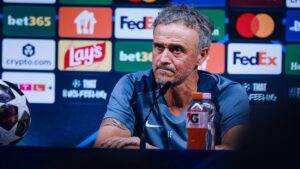
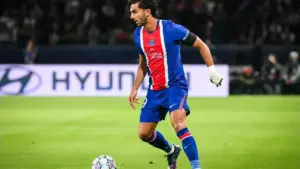
Luis Campos is the name that sits behind almost every Paris Saint-Germain signing of the last four years, and almost none of the headlines. He does not pick the team, he rarely speaks in public, and he has never been the most powerful man in the building. Yet the shape of the squad that is now defending a Champions League title back-to-back is largely his work.
Here is who he is, what he actually does at PSG, and why the numbers behind the 2026 window are the clearest argument for him yet.
Who is Luis Campos?
Campos is a Portuguese football executive, born in 1964, who works as PSG’s football advisor — the role most outlets, including PSG Talk, describe in plain terms as sporting director. He arrived in the French capital in the summer of 2022 and has run recruitment there ever since.
He is not a former star player. His route into the game was through coaching in Portugal and then, decisively, through scouting: he worked as a talent spotter at Real Madrid during Jose Mourinho’s time in charge, and it was there that his reputation as an evaluator of young players took hold. Everything since has been built on that skill rather than on a playing career.
The Monaco and Lille years
Campos made his name in Ligue 1 twice over, at two clubs with a fraction of PSG’s budget.
At Monaco, from 2013, he oversaw a recruitment operation that has few equals in the modern French game — a pipeline of young players bought or promoted cheaply, developed at speed and sold for many multiples of their cost. Then at Lille, from 2017, he did a version of the same thing again, assembling a squad on a shoestring that would go on to break PSG’s grip on the Ligue 1 title in 2021, after he had already moved on.
That is the pattern worth understanding. Campos is not primarily a buyer of finished products. He is a trader: identify early, buy at a price that cannot hurt you, accept that the best ones will leave, and make sure the club is richer when they do.
What Luis Campos actually does at PSG
The job title matters less than the remit. Campos leads the identification and negotiation side of PSG’s transfer business, working under president Nasser Al-Khelaifi and alongside head coach Luis Enrique, who has the final say on what the team looks like on the pitch.
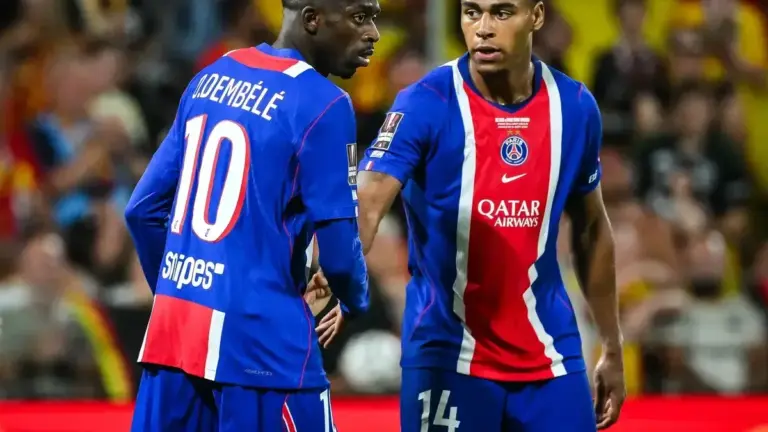
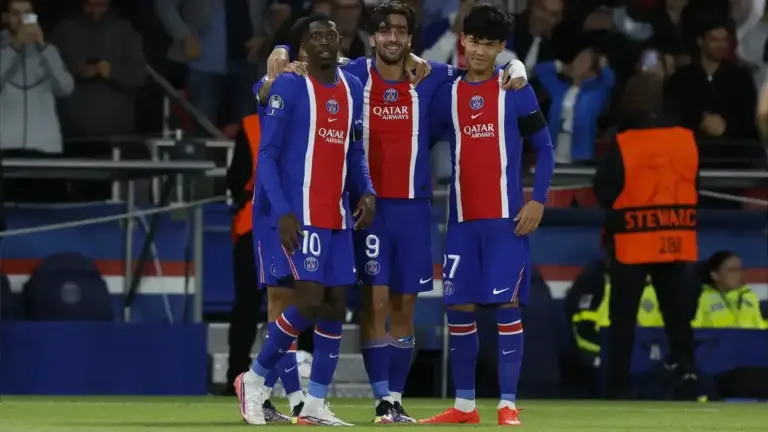
That division of labour has been the making of this era. Luis Enrique wants a specific kind of footballer — young, technically secure, able to press and to play under pressure — and Campos has spent four windows sourcing them. The current first-team list, which you can read in full in our guide to the PSG squad for 2026/27, is noticeably younger and noticeably less expensive per head than the galactico-era rosters it replaced.
The other half of the remit is the harder half: selling. PSG spent a decade unable to move players on, absorbing enormous wages rather than take a loss. Campos has been central to reversing that, and the summer of 2026 was the clearest demonstration of it.
The 2026 window: the numbers that vindicate him
Paris did serious business in both directions before the window shut on 1 September 2026.
In: Maghnes Akliouche from Monaco for a reported €50m, Ferran Torres from Barcelona for around €48.5m, Mika Godts from Ajax for roughly €45m, Lucas Digne back from Aston Villa for a modest fee, and goalkeeper Alessandro Longoni on a free.
Out: Bradley Barcola to Liverpool on deadline day in a deal reported to be worth up to €140m, Ibrahim Mbaye to Aston Villa for €55m, Goncalo Ramos to AC Milan for €74m, Randal Kolo Muani permanently to Juventus for €38m and Lee Kang-in to Atletico Madrid for €35m. Renato Sanches left as a free agent after his contract was terminated by mutual agreement.
The full ledger, with the moves that did not happen, is in our PSG 2026 transfer ins and outs round-up.
The independent verdict arrived in September. The CIES Football Observatory, as reported by PSG Talk, calculated that PSG took in €207m more than they spent across 2026 — the best transfer balance of any club in the world for the year. On the same measure the club’s net spend over the previous decade stands at roughly €209m in deficit, which is to say one more summer like this one would wipe out ten years of overspending. For context, the report set that against Saudi side Al-Hilal’s net outlay of €837m since 2016. We covered the full report in our piece on PSG’s €207m transfer balance.
The criticisms
He is not beyond argument. Selling Barcola, a 24-year-old French international, in the same window as a squad rebuild is the kind of decision that only looks clever if the replacements deliver — and Akliouche is still waiting for a first PSG goal, however encouraging his early creative work has been. Ferran Torres, whose profile we set out in our guide to the Spaniard, answered the question emphatically with a hat-trick against Slovan Bratislava in the Champions League, but a domestic season that has begun without a league win is a reminder that a good balance sheet is not the same thing as a settled team.
There is also the structural point. A trader’s model means accepting churn, and churn is uncomfortable at a club whose supporters have been sold permanence. Every summer under Campos has involved letting a popular player go.
Why he matters
Because PSG’s identity changed, and he was one of the people who changed it. The club that once signed the most famous footballers available now signs the most useful ones and sells the rest at a profit, while winning the European Cup twice in a row. That is a different institution to the one Qatar Sports Investments bought, and Luis Campos — quiet, unglamorous, rarely photographed — has as good a claim as anyone to having built the squad that made it possible.