Who owns PSG? The short answer is Qatar Sports Investments, the Qatari state-backed fund that bought Paris Saint-Germain in 2011 and has run the club ever since through its chairman, Nasser Al-Khelaifi. The longer answer — how a mid-table Ligue 1 side with a half-empty stadium became back-to-back European champions — is the story of the most consequential ownership change in French football history.
Here is who actually owns Paris Saint-Germain, who makes the decisions, and how the structure has changed since the takeover.
Who owns PSG? Qatar Sports Investments
Paris Saint-Germain are owned by Qatar Sports Investments, usually shortened to QSI — an investment vehicle founded in 2005 and linked to the Qatari state’s sovereign wealth apparatus. QSI bought a controlling stake in PSG in the summer of 2011 and acquired the remaining shares the following year, taking full ownership of the club.
Before that, PSG had been owned by the American investment firm Colony Capital, which bought the club from the French broadcaster Canal+ in 2006. Those were lean years. Paris had won a single Ligue 1 title in their entire existence, the Parc des Princes was not full, and the club’s ambitions were domestic at best.
QSI’s arrival did not just change the transfer budget. It changed what the club was for. Paris Saint-Germain became a project with a global audience, a commercial strategy built around the city’s name as much as the team’s, and an openly stated target of winning the Champions League.
Nasser Al-Khelaifi: the man who runs the club
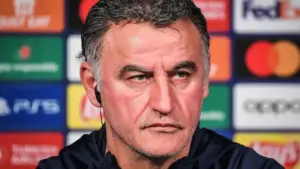
The most important name in the ownership structure is Nasser Al-Khelaifi. A former professional tennis player from Doha, he was installed as PSG’s president and chairman shortly after the takeover and has held the role for the entire QSI era, making him one of the longest-serving executives at any elite European club.
Al-Khelaifi is also chairman of QSI itself and of beIN Media Group, the Qatari broadcaster, which gives him a foot on both the buying and the selling side of football’s television economy. He chairs the European Club Association, the body that represents clubs in negotiations with UEFA and FIFA, and sits on UEFA’s executive committee — which makes him arguably the most influential club official in European football, quite separately from what happens on the pitch in Paris.
In practice, he is the decision-maker supporters see and hear. When Paris break a transfer record, settle a contract standoff or hold the line on a player’s valuation, it is Al-Khelaifi’s name attached to it.
Does anyone else own part of PSG?
Yes — but only a slice. In 2023 the American private equity firm Arctos Partners, which specialises in minority stakes in sports franchises, bought a reported holding of around 12.5% in the club. QSI retained overwhelming control and every element of day-to-day decision-making.
That kind of minority sale has become common across elite European football, and it is worth being clear about what it is and is not. Arctos did not buy influence over team selection or transfer policy. What a stake like that does is establish a market valuation for the club and bring in outside capital for infrastructure without the controlling owner giving up control.
The football structure beneath the ownership
Ownership is not the same thing as football management, and PSG’s sporting hierarchy has been reshaped repeatedly under QSI. The current version is the most stable it has been.
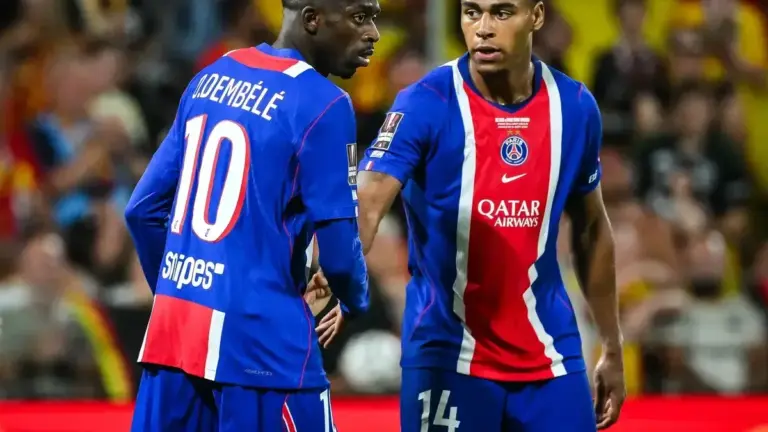
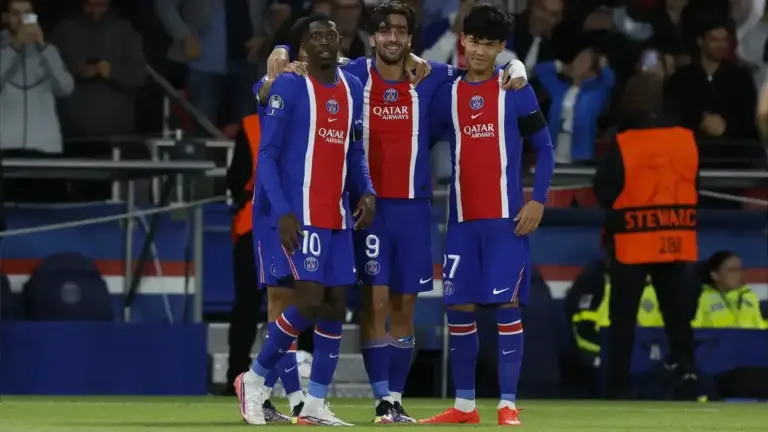
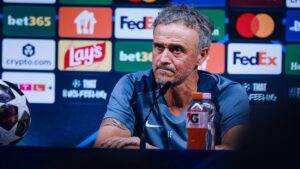
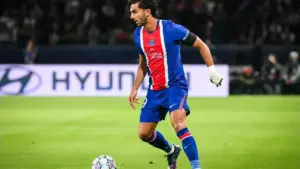
Luis Enrique was appointed head coach in July 2023 and has since delivered two Champions League titles in succession — the trophy QSI spent more than a decade chasing. Luis Campos leads the recruitment operation. On the pitch, captain Marquinhos leads a squad deliberately rebalanced towards younger, harder-running players rather than assembled around individual superstars.
That shift is the most interesting thing about the modern QSI era. The early years were defined by marquee signings. The trophy-winning years have been defined by the opposite approach: a coherent system, a coach given genuine authority, and a squad built to fit it. You can see the result in the 2026/27 first-team squad.
What QSI has actually built
Beyond the trophy cabinet, the ownership has invested heavily in the club’s physical footprint. The Campus PSG training complex at Poissy, opened in 2023, replaced the ageing Camp des Loges as the base for the men’s, women’s and academy sides. The academy itself — the source of the Titis Parisiens — has become a genuine pipeline into the first team rather than a sales channel for everyone else.
The one long-running tension is the stadium. PSG do not own the Parc des Princes; it belongs to the city of Paris, and negotiations over a purchase have been unresolved for years, with the club periodically raising the possibility of building elsewhere. For an ownership group that has bought almost everything else it wanted, the home ground remains the asset it does not control.
Who owns PSG: the short version
- Owner: Qatar Sports Investments (QSI) — majority owner from 2011, full ownership from 2012
- Chairman and president: Nasser Al-Khelaifi
- Minority shareholder: Arctos Partners, a reported stake of around 12.5% since 2023
- Previous owner: Colony Capital (2006–2011)
- Head coach: Luis Enrique, appointed July 2023
- Sporting advisor: Luis Campos
Fifteen years on, the sporting verdict is not really in dispute. Paris Saint-Germain went from one league title in four decades to a record haul of Ligue 1 championships and two consecutive European Cups. Whatever else supporters make of state ownership in football — and it is a debate worth having — the trophies QSI came for are now in the building at the Parc.
Club and squad information is published by Paris Saint-Germain. Competition records are held by Ligue 1 and UEFA. Shareholding figures are as publicly reported.