Paris Saint-Germain are, right now, one of only nine clubs in the history of European football’s premier competition to have successfully defended it. That is the company the Parc des Princes keeps in September 2026 — and it is worth spelling out, because the list of back-to-back Champions League winners is shorter than almost any other honour roll in the sport.
Winning the European Cup once is hard. Winning it twice running has been managed by a tiny handful of sides across seven decades, and in the modern Champions League format it has happened exactly twice. Here is every club to have done it, why it became so rare, and where Luis Enrique’s Paris side fits.
Back-to-back Champions League winners: the full list
Taking the competition in full, from its 1955/56 launch as the European Cup through to the present day, these are the clubs that have won it in consecutive seasons:
- Real Madrid — 1956, 1957, 1958, 1959, 1960
- Benfica — 1961, 1962
- Inter Milan — 1964, 1965
- Ajax — 1971, 1972, 1973
- Bayern Munich — 1974, 1975, 1976
- Liverpool — 1977, 1978
- Nottingham Forest — 1979, 1980
- AC Milan — 1989, 1990
- Real Madrid — 2016, 2017, 2018
- Paris Saint-Germain — 2025, 2026
Nine clubs, ten runs. Real Madrid are the only side to appear twice, and they are also the reason the early history of the trophy looks so lopsided: they won the first five editions outright, a sequence no club has come close to repeating.
Why retaining it became almost impossible
Look at the dates and a pattern jumps out. Eight of the ten consecutive-title runs happened before 1991. Then the competition changed shape.
The old European Cup was a straight knockout for domestic champions only — a small field, and a holder who could realistically expect to face two or three genuine rivals on the way to a final. The rebrand to the UEFA Champions League in 1992 brought group stages, then a widening of entry to multiple clubs from the strongest leagues, and eventually the 36-team league phase used today. Our guide to the league-phase format sets out how many games that now means before the knockouts even begin.
The consequence was a 27-year drought. After AC Milan’s 1990 defence, nobody retained the trophy again until Real Madrid in 2017. Holders kept going out early — sometimes to sides they would have been favoured to beat over a single tie in the 1970s. More matches, more elite opponents and a deeper pool of contenders made the defence a statistical near-impossibility rather than a natural follow-up.
PSG’s place on the list
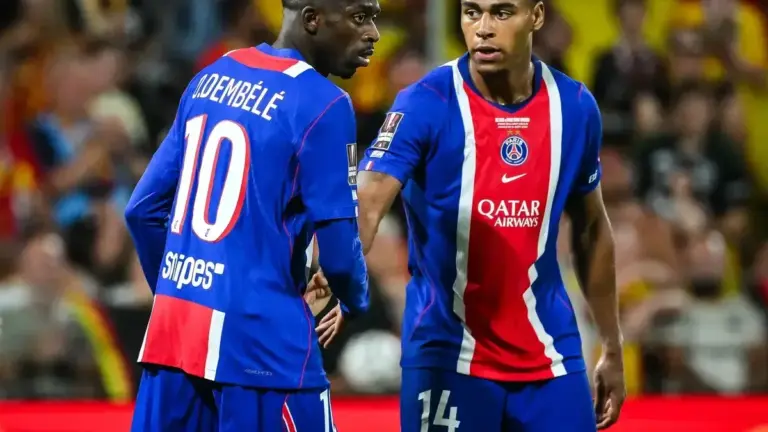
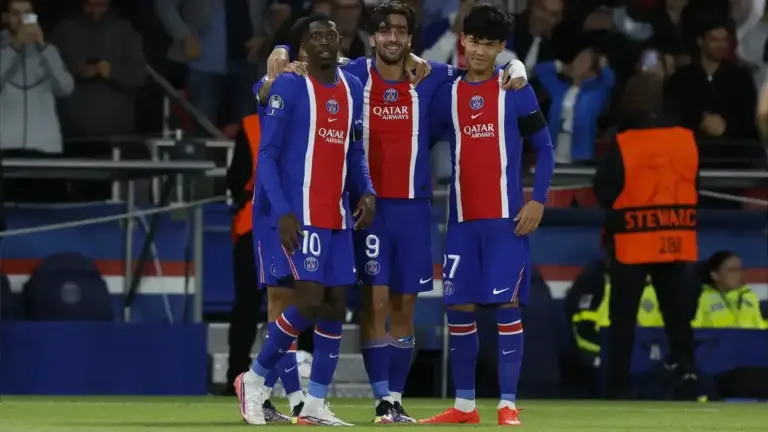
Which is what makes what happened at the Parc so unusual. Paris won the Champions League for the first time in 2024/25 and then retained it in 2025/26, becoming only the second club to defend the trophy since the competition took its modern name — and the first, other than Real Madrid, to manage it in more than three decades. Our breakdown of how many Champions Leagues PSG have won covers the road to both.
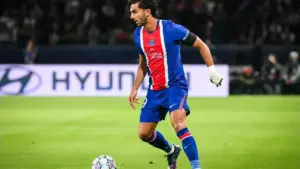
It also completed a shift in the club’s European identity that had been a long time coming. For most of the Qatar Sports Investments era, Paris were the team that assembled superstars and lost knockout ties. Under Luis Enrique, appointed in July 2023, they became the side that wins them. Marquinhos, the captain through the lean years as well as the good ones, lifted both.
Paris added the second UEFA Super Cup in their history in August 2026, beating Aston Villa 2-1, which is the trophy the European title earns you.
Who has won three in a row?
Only three clubs have ever won three or more consecutive European Cups: Real Madrid (five from 1956 to 1960, then three from 2016 to 2018), Ajax (1971–73) and Bayern Munich (1974–76). That is the entire group. Benfica, Inter, Liverpool, Nottingham Forest, AC Milan and, so far, PSG all stopped at two.
A third straight title would therefore put Paris in a bracket of four clubs in seventy years — and would be the first three-in-a-row of the league-phase era, a format nobody has yet defended twice. Marquinhos has already made clear he is targeting exactly that.
Can PSG make it three?
The honest answer in early September is: on the evidence of the domestic season so far, it is not the way to bet — but that has never been how this team is measured.
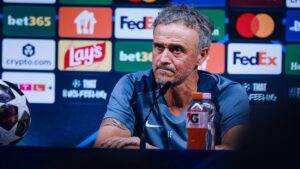
Paris have made an awkward start to 2026/27. They lost the Trophée des Champions 1-0 to Lens, drew 2-2 away at Rennes on the opening weekend and, per Get French Football News, sit seven points behind leaders Monaco after two draws and a defeat in three league games. Enrique himself did not dodge it: "If we’re just talking about results, it’s been a disastrous start to the season," he told reporters, before adding that his team "deserve more points". We covered that press conference in full.
The counter-argument is the one the history above supplies. This squad is built to peak in the spring, and the last two seasons have vindicated the approach twice over. A slow September did not stop either of the previous two defences of a title, and the league phase is designed to be survivable for a side that finds its rhythm late. If you want the fuller picture on the man in charge, our profile of Luis Enrique explains why the method has held.
What is already settled is the part nobody can take away. Whatever happens between now and next May, Paris Saint-Germain are on a list of nine clubs in the entire history of European football — and the only one to join it in the last eight years.
Competition history and honours are recorded by UEFA. Current-season quotes and Ligue 1 standings reported by Get French Football News.